Along The Lines Dwarf Bearded Iris
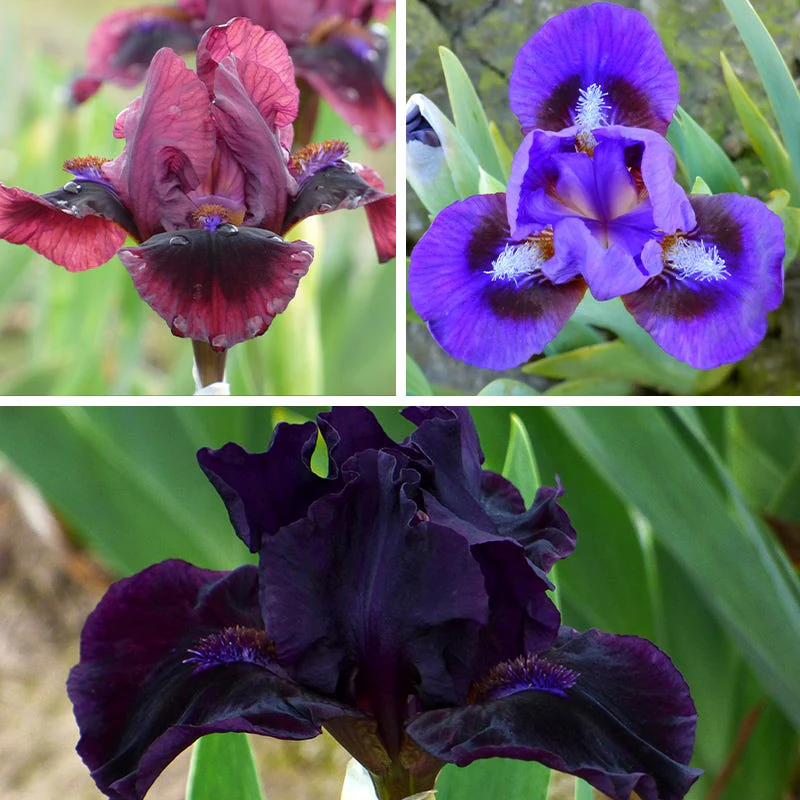
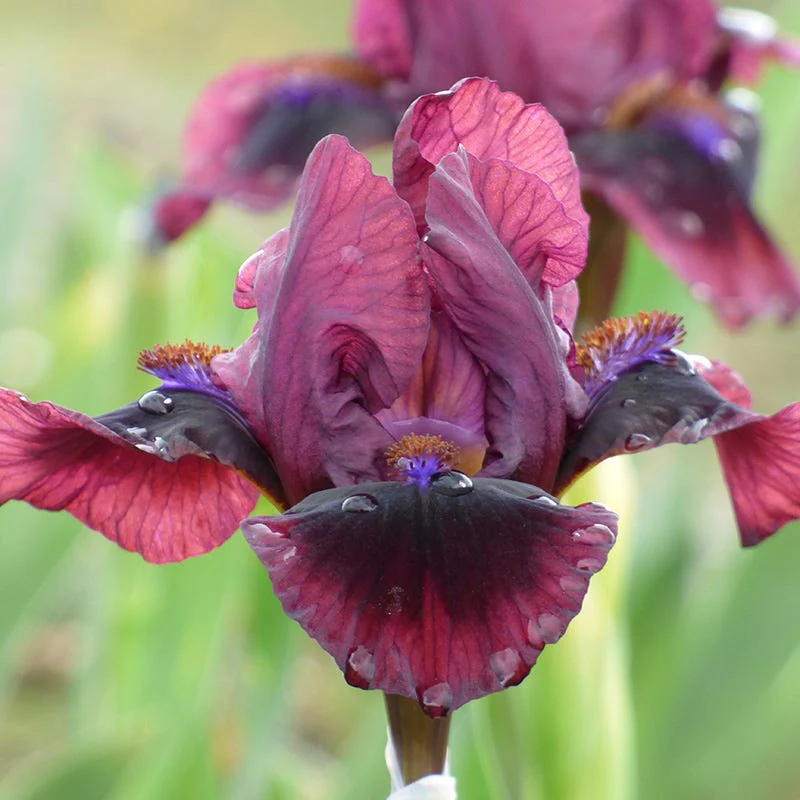
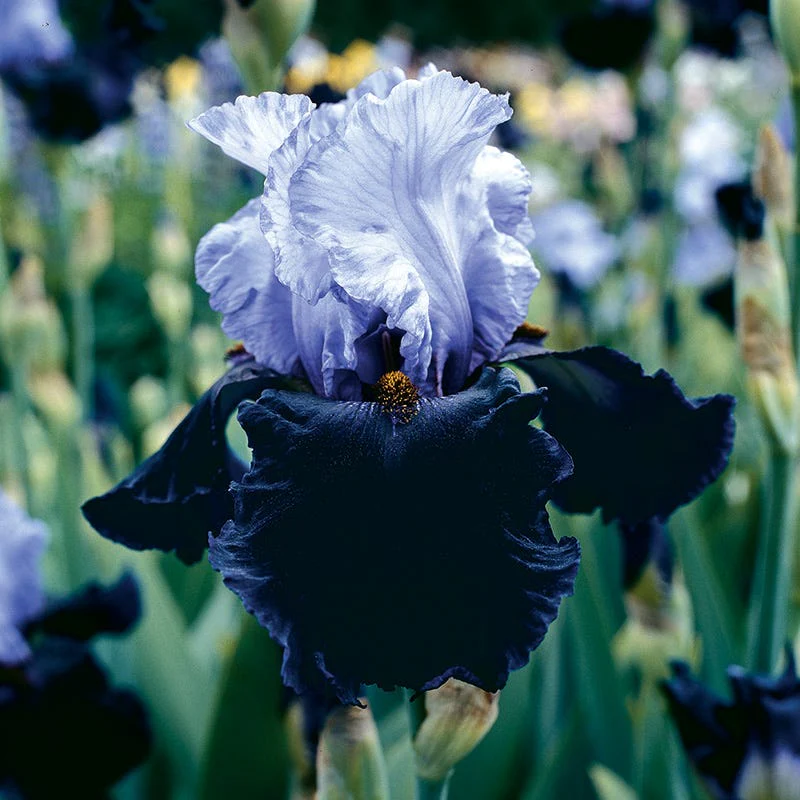
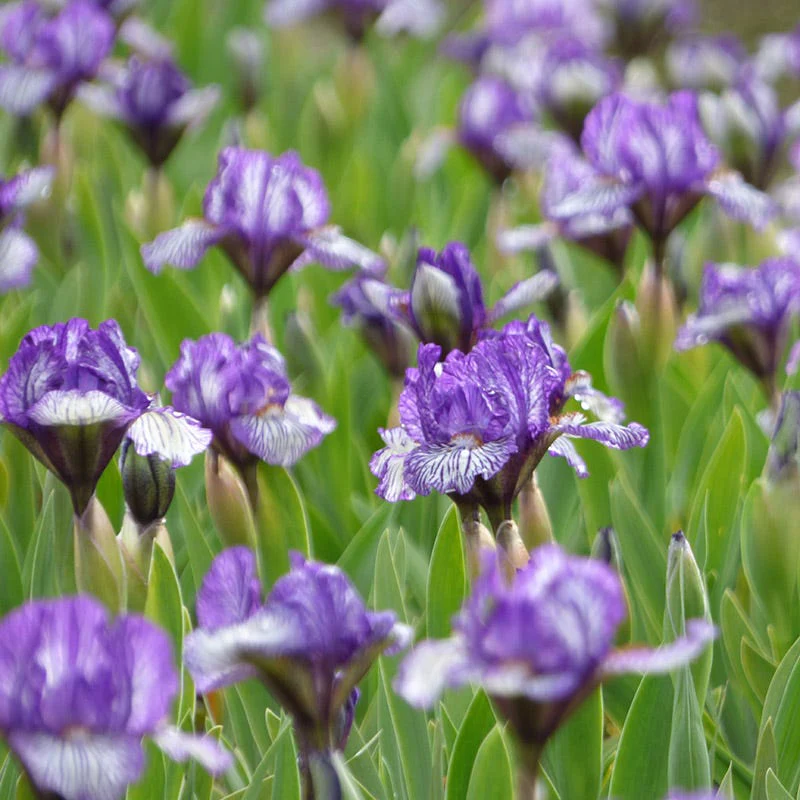
Step aside, garden giants—‘Along The Lines’ Dwarf Bearded Iris proves that petite plants can pack a powerful punch. With velvety standards in deep purple-blue and dramatic black-purple falls edged in white, these pint-sized petals paint a moody masterpiece just as spring begins to stir. Ideal for edging beds, adding height variety in container combos, or nestling among rock gardens, this early-season star delivers color contrast and texture where it counts most.
At just 10–14 inches tall, ‘Along The Lines’ is perfectly proportioned for the front of your flower border or nestled between larger spring bloomers. Its unique color palette offers a modern, artistic vibe that feels both timeless and fresh—like a living brushstroke in your garden’s grand canvas.
Plant rhizomes in well-draining soil with plenty of sun. Avoid deep planting—let those shoulders peek out! Water regularly during establishment, then reduce. Deadhead after bloom for a tidy look, and divide every 3–4 years to keep the floral fireworks coming.
Whether you’re crafting a cottage-inspired entryway, enhancing your meadow’s edge, or bringing whimsy to a window box, ‘Along The Lines’ makes a bold statement on a compact scale. It’s elegance, edge, and environmental ease—all wrapped in one ruffled bloom.
Go bold, go small, go beautifully Along The Lines.
Growing Bearded Irises These majestic flowers are surprisingly easy to grow, and actually require less attention than almost any other garden flowers. Your iris roots will arrive with the foliage "trimmed" from this spring's growth. You'll find the "root" is not really a bulb, but what is called a "rhizome"--an irregularly shaped bulbous root that grows at a right angle from the foliage. Leave the trimmed foliage as it is, and simply bury the rhizome with the top of it showing through the soil surface. Bearded irises grow best with the tops of their rhizomes exposed.
Next spring, new foliage and the flower spikes will sprout strongly from the rhizome. What's more, next summer, you'll notice the rhizome multiplying for even more flowers as years go by.
Product Information
Product Information
Shipping & Returns
Shipping & Returns
Along The Lines Dwarf Bearded Iris
Along The Lines Dwarf Bearded Iris
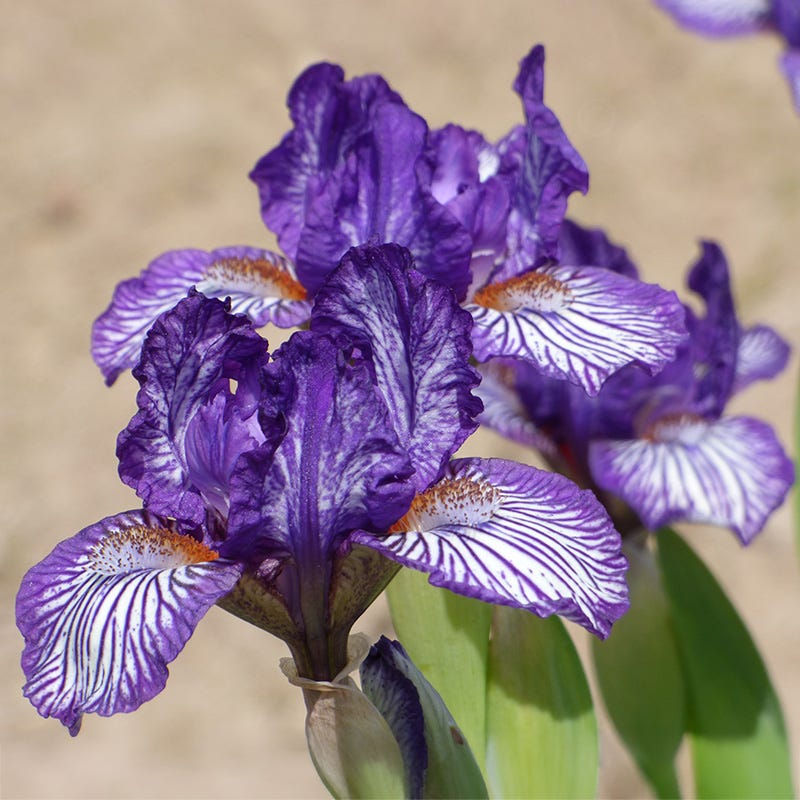
Step aside, garden giants—‘Along The Lines’ Dwarf Bearded Iris proves that petite plants can pack a powerful punch. With velvety standards in deep purple-blue and dramatic black-purple falls edged in white, these pint-sized petals paint a moody masterpiece just as spring begins to stir. Ideal for edging beds, adding height variety in container combos, or nestling among rock gardens, this early-season star delivers color contrast and texture where it counts most.
At just 10–14 inches tall, ‘Along The Lines’ is perfectly proportioned for the front of your flower border or nestled between larger spring bloomers. Its unique color palette offers a modern, artistic vibe that feels both timeless and fresh—like a living brushstroke in your garden’s grand canvas.
Plant rhizomes in well-draining soil with plenty of sun. Avoid deep planting—let those shoulders peek out! Water regularly during establishment, then reduce. Deadhead after bloom for a tidy look, and divide every 3–4 years to keep the floral fireworks coming.
Whether you’re crafting a cottage-inspired entryway, enhancing your meadow’s edge, or bringing whimsy to a window box, ‘Along The Lines’ makes a bold statement on a compact scale. It’s elegance, edge, and environmental ease—all wrapped in one ruffled bloom.
Go bold, go small, go beautifully Along The Lines.
Growing Bearded Irises These majestic flowers are surprisingly easy to grow, and actually require less attention than almost any other garden flowers. Your iris roots will arrive with the foliage "trimmed" from this spring's growth. You'll find the "root" is not really a bulb, but what is called a "rhizome"--an irregularly shaped bulbous root that grows at a right angle from the foliage. Leave the trimmed foliage as it is, and simply bury the rhizome with the top of it showing through the soil surface. Bearded irises grow best with the tops of their rhizomes exposed.
Next spring, new foliage and the flower spikes will sprout strongly from the rhizome. What's more, next summer, you'll notice the rhizome multiplying for even more flowers as years go by.
Product Information
Product Information
Shipping & Returns
Shipping & Returns
Description
Step aside, garden giants—‘Along The Lines’ Dwarf Bearded Iris proves that petite plants can pack a powerful punch. With velvety standards in deep purple-blue and dramatic black-purple falls edged in white, these pint-sized petals paint a moody masterpiece just as spring begins to stir. Ideal for edging beds, adding height variety in container combos, or nestling among rock gardens, this early-season star delivers color contrast and texture where it counts most.
At just 10–14 inches tall, ‘Along The Lines’ is perfectly proportioned for the front of your flower border or nestled between larger spring bloomers. Its unique color palette offers a modern, artistic vibe that feels both timeless and fresh—like a living brushstroke in your garden’s grand canvas.
Plant rhizomes in well-draining soil with plenty of sun. Avoid deep planting—let those shoulders peek out! Water regularly during establishment, then reduce. Deadhead after bloom for a tidy look, and divide every 3–4 years to keep the floral fireworks coming.
Whether you’re crafting a cottage-inspired entryway, enhancing your meadow’s edge, or bringing whimsy to a window box, ‘Along The Lines’ makes a bold statement on a compact scale. It’s elegance, edge, and environmental ease—all wrapped in one ruffled bloom.
Go bold, go small, go beautifully Along The Lines.
Growing Bearded Irises These majestic flowers are surprisingly easy to grow, and actually require less attention than almost any other garden flowers. Your iris roots will arrive with the foliage "trimmed" from this spring's growth. You'll find the "root" is not really a bulb, but what is called a "rhizome"--an irregularly shaped bulbous root that grows at a right angle from the foliage. Leave the trimmed foliage as it is, and simply bury the rhizome with the top of it showing through the soil surface. Bearded irises grow best with the tops of their rhizomes exposed.
Next spring, new foliage and the flower spikes will sprout strongly from the rhizome. What's more, next summer, you'll notice the rhizome multiplying for even more flowers as years go by.