Wild Geranium
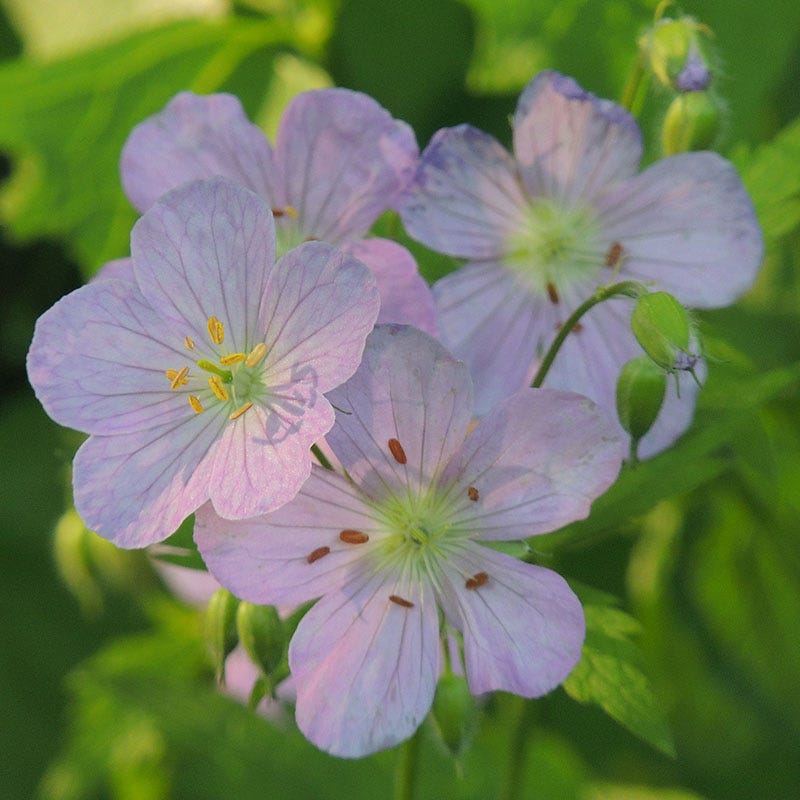
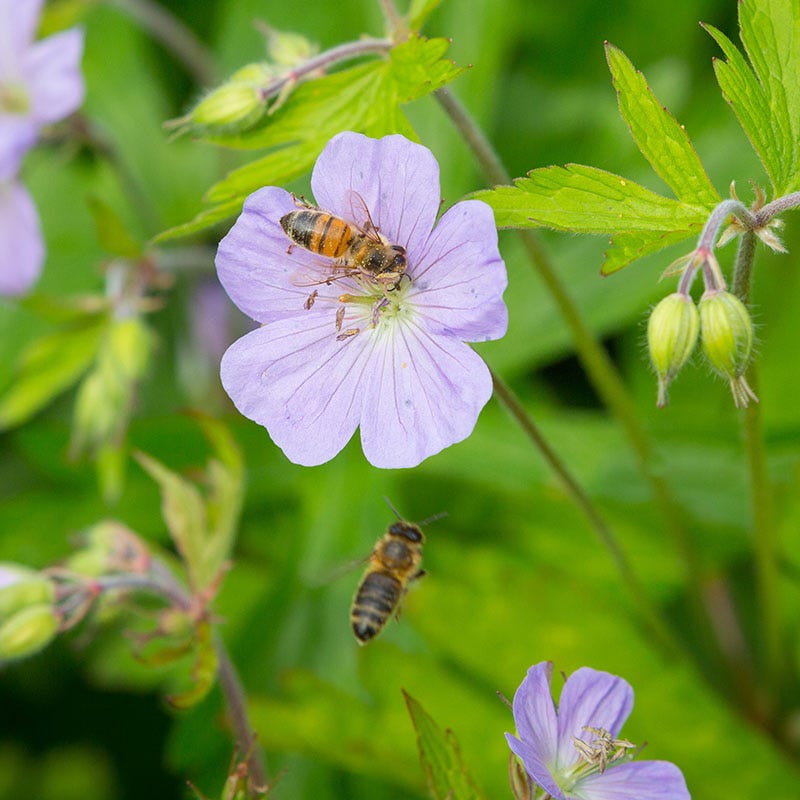
Wild Geranium is native to woodlands, forest edges, and dappled meadows throughout eastern North America, from Canada south to Georgia and west to Arkansas. It produces larger flowers than other native geranium species, atop a mound of deep green leaves. Thanks to the attractive mounding habit, it’s a good replacement for mulching in the garden. Given a moist, loamy soil, plants will multiply to naturalize in the garden. Plant in masses for a dense groundcover or combine with other native wildflowers like Woodland Phlox, Columbine, and Trillium. Wild Geranium tolerates some drought once established. The species is identified by the Xerces Society as a plant of special value for native bees. The flowers are also visited by flower flies (Syrphid). Plants produce interesting seed heads after flowering, which may attract mourning doves and bobwhite quail to feed.
Product Information
Product Information
Shipping & Returns
Shipping & Returns
Wild Geranium
Wild Geranium
Wild Geranium is native to woodlands, forest edges, and dappled meadows throughout eastern North America, from Canada south to Georgia and west to Arkansas. It produces larger flowers than other native geranium species, atop a mound of deep green leaves. Thanks to the attractive mounding habit, it’s a good replacement for mulching in the garden. Given a moist, loamy soil, plants will multiply to naturalize in the garden. Plant in masses for a dense groundcover or combine with other native wildflowers like Woodland Phlox, Columbine, and Trillium. Wild Geranium tolerates some drought once established. The species is identified by the Xerces Society as a plant of special value for native bees. The flowers are also visited by flower flies (Syrphid). Plants produce interesting seed heads after flowering, which may attract mourning doves and bobwhite quail to feed.
Original: $15.99
-70%$15.99
$4.80Product Information
Product Information
Shipping & Returns
Shipping & Returns
Description
Wild Geranium is native to woodlands, forest edges, and dappled meadows throughout eastern North America, from Canada south to Georgia and west to Arkansas. It produces larger flowers than other native geranium species, atop a mound of deep green leaves. Thanks to the attractive mounding habit, it’s a good replacement for mulching in the garden. Given a moist, loamy soil, plants will multiply to naturalize in the garden. Plant in masses for a dense groundcover or combine with other native wildflowers like Woodland Phlox, Columbine, and Trillium. Wild Geranium tolerates some drought once established. The species is identified by the Xerces Society as a plant of special value for native bees. The flowers are also visited by flower flies (Syrphid). Plants produce interesting seed heads after flowering, which may attract mourning doves and bobwhite quail to feed.